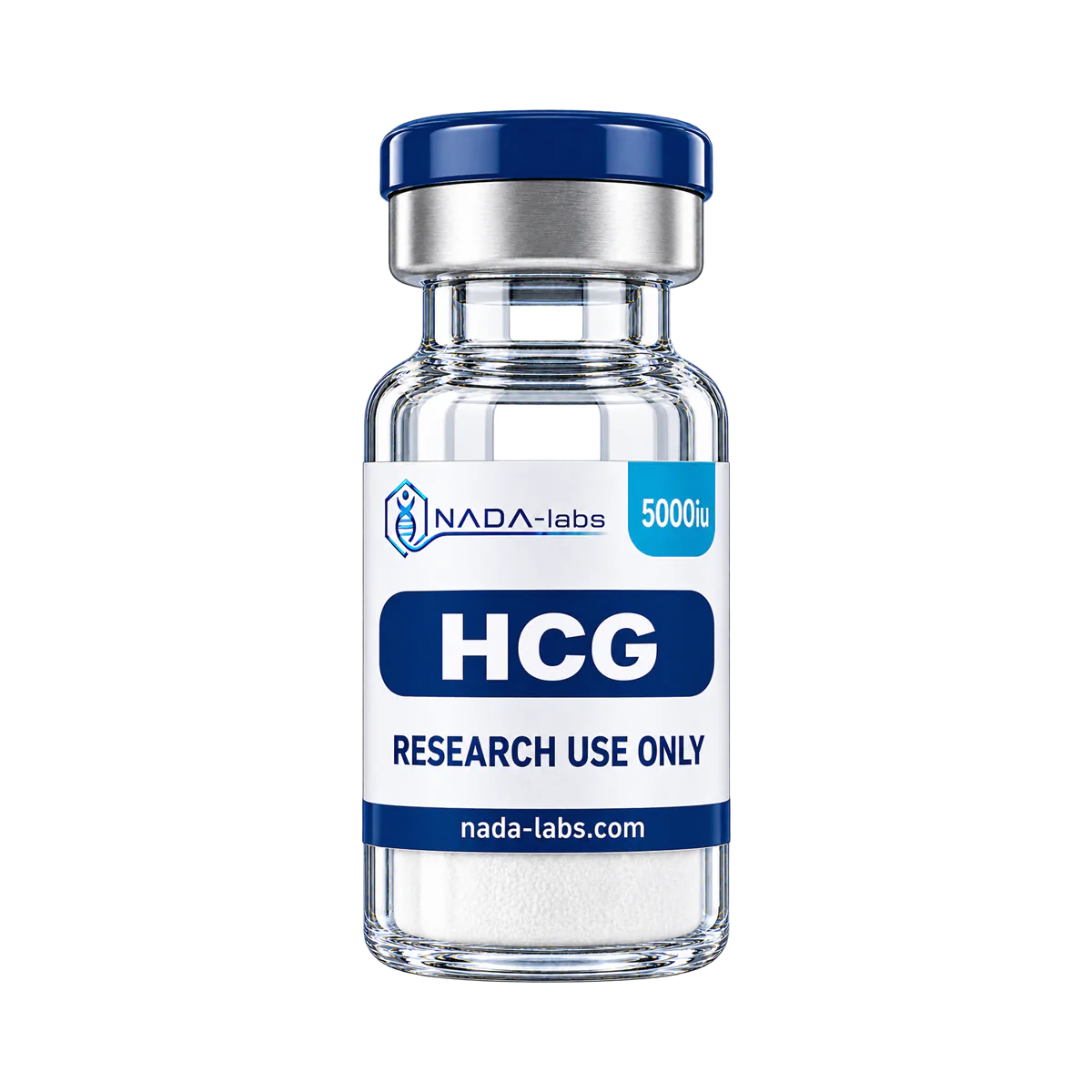
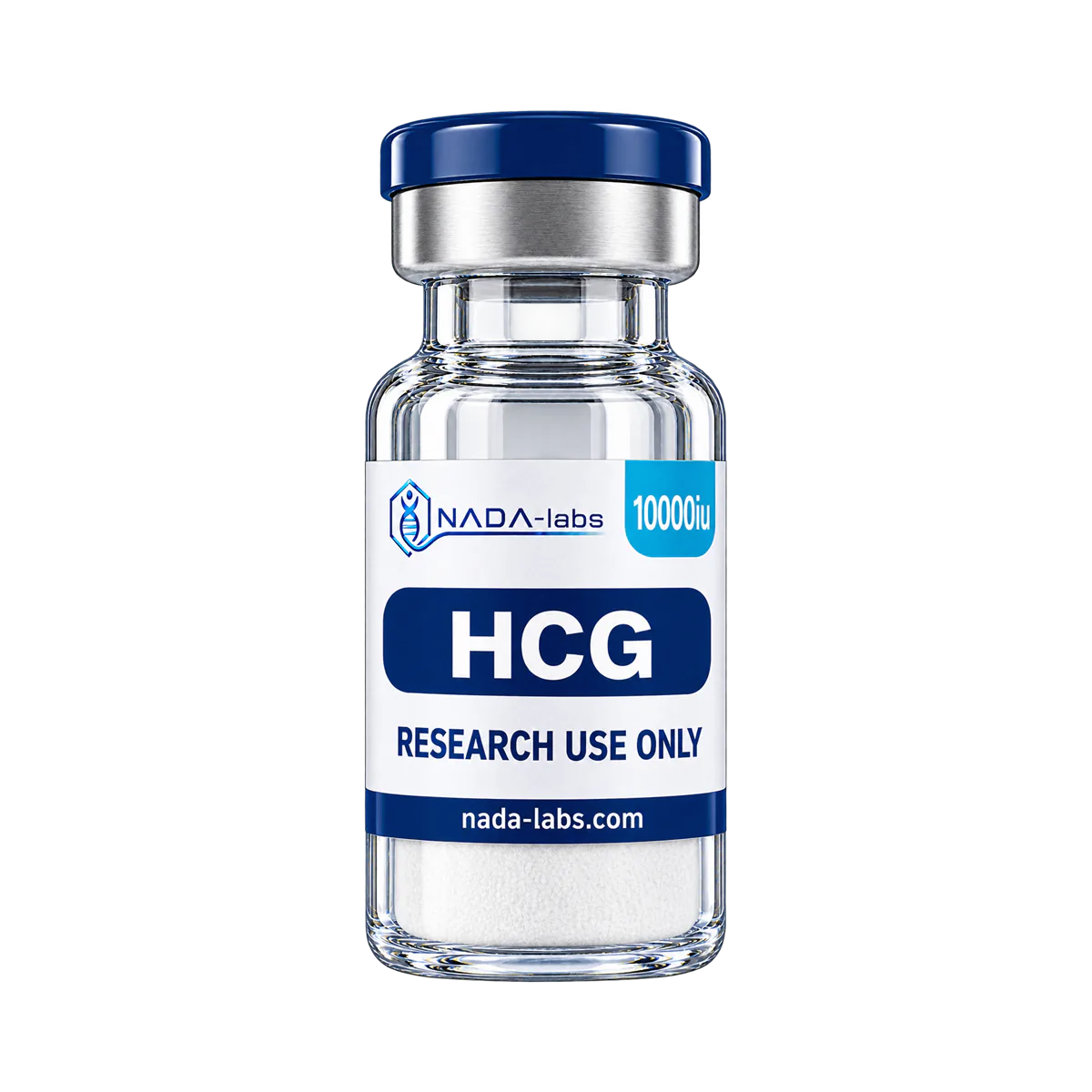
Description
HCG (human chorionic gonadotropin) is a placental glycoprotein hormone in which a 92-residue α subunit, shared with LH, FSH and TSH, is non-covalently linked to a hormone-specific 145-residue β subunit; N- and O-linked sugar side chains account for about 25-30 % of its molecular weight of approximately 36,000. The vial content is stated in international units (IU) of biological activity, not as mass. As with all lyophilised proteins, keep vials sealed, cold and away from light.
HCG: what the published research shows
Compiled by NADA-Labs from the peer-reviewed literature cited below. No own study data.
hCG is a heterodimeric glycoprotein hormone made by fused and differentiated placental syncytiotrophoblast cells; its α subunit is common to hCG and the pituitary hormones LH, FSH and TSH, while the β subunit is specific to hCG (Cole 2010, PMID 20735820). Despite only limited sequence similarity, both subunits have similar folds with a cystine-knot motif at their core, and the carboxy-terminal peptide of the β subunit is rich in O-linked sugars (Wu 1994, PMID 7922031); biologically active recombinant hCG was expressed in mouse C127 cells (Lustbader 1987, PMID 3654658). The research literature attributes its effects to activation of the LH/CG receptor (LHCGR), which it shares with LH; in cell models hCG was more potent than LH on cAMP production, whereas LH more strongly activated ERK1/2 and AKT8. It has been studied in receptor-expressing cell lines and primary human granulosa-lutein cells, in transgenic mice, in randomised studies in women in assisted-reproduction cycles and in men, and in retrospective case series1,2,3,4,5,6,7,8.
Evidence base: Six human studies — one multicentre, double-blind randomised trial comparing recombinant and urinary hCG in women in assisted-reproduction cycles (n = 190)1, one double-blind, placebo-controlled trial in older men with partial androgen deficiency (n = 40)2, two randomised testicular-physiology studies in healthy men with experimentally suppressed gonadotropins (n = 29 and 37)3,4 and two retrospective case series without control group (n = 26 and 49)5,6 — plus one transgenic-mouse study7 and one cell-signalling study8. In the randomised studies in men hCG was given for 10 days to 3 months2,3,4; the assisted-reproduction trial tested a single administration after down-regulation and stimulation with recombinant FSH1. In the two testicular-physiology studies hCG was given in addition to testosterone enanthate or a GnRH antagonist3,4, and in the two case series together with testosterone or other agents5,6. Further records cover a randomised trial on ovarian hyperstimulation syndrome after an hCG trigger (Engmann 2008, PMID 17462639) and the attraction of regulatory T cells by hCG in human pregnancy tissue and migration assays (Schumacher 2009, PMID 19380797). No open full text is available for most of the cited studies, so the summary relies on their abstracts.
Key studies at a glance
| Study | Model | Design | Main result |
|---|---|---|---|
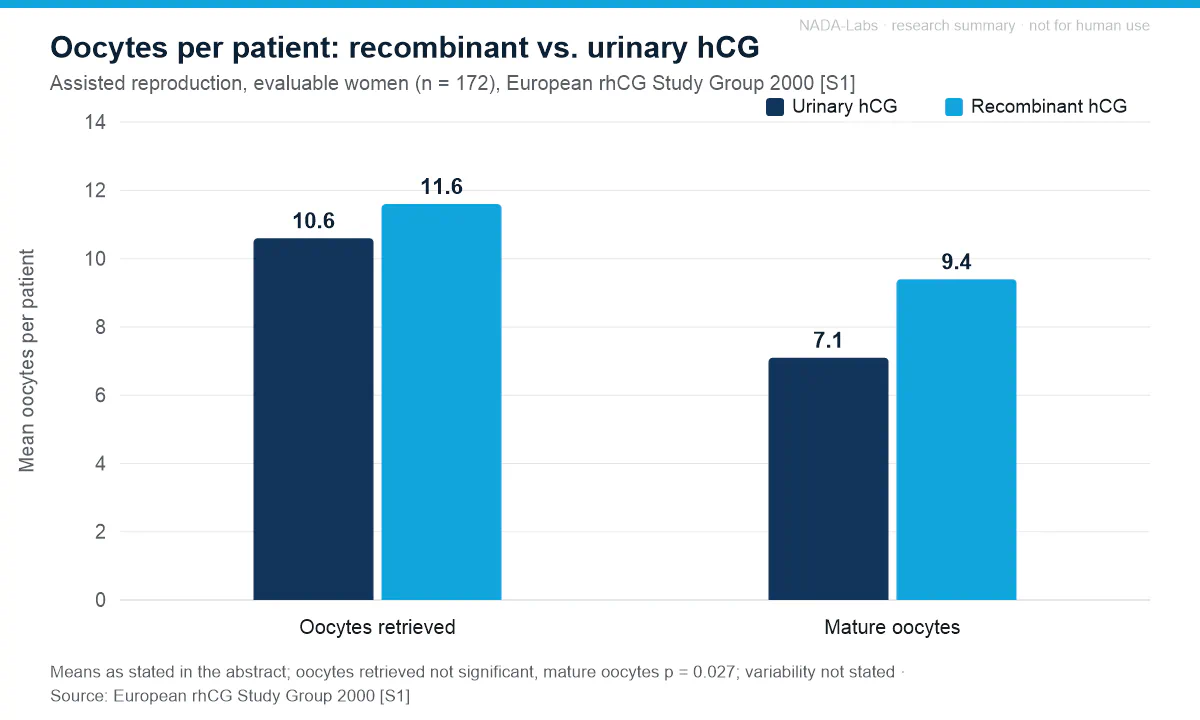
| European rhCG Study Group 20001 | Human, women in assisted-reproduction cycles (n = 190; 172 evaluable) | Multicentre RCT, double-blind, double-dummy; recombinant vs urinary hCG, single administration | Oocytes retrieved 11.6 vs 10.6 (n.s.); mature oocytes 9.4 vs 7.1 (p = 0.027); adverse events 22.7 vs 45.1 % (p = 0.0004) |
| Liu 20022 | Human, men > 60 years with partial androgen deficiency (n = 40) | RCT, double-blind, placebo-controlled, recombinant hCG, 3 months | Lean body mass approx. +2 kg (p < 0.001), fat mass approx. -1 kg (p < 0.05), testosterone and estradiol markedly increased (150 %); strength and physical function not significantly changed |
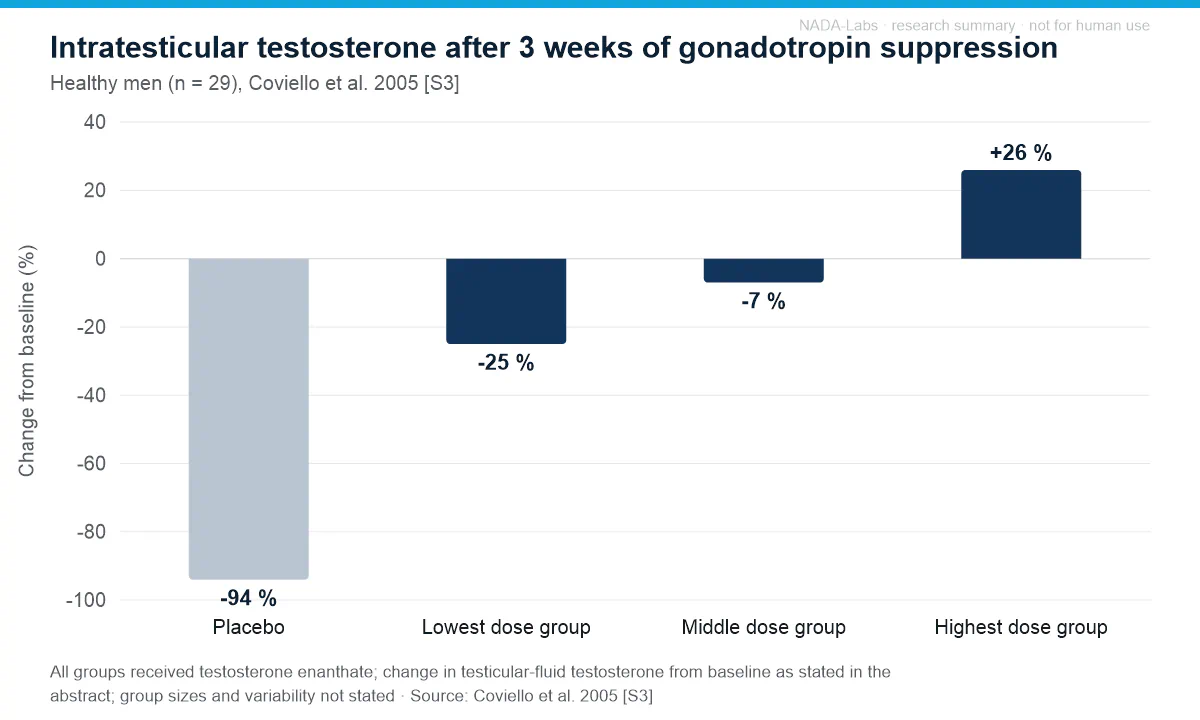
| Coviello 20053 | Human, healthy men with testosterone-induced gonadotropin suppression (n = 29) | Randomised, placebo-controlled, three hCG dose groups, 3 weeks; testicular fluid by fine-needle aspiration | Intratesticular testosterone -94 % with placebo vs -25 %, -7 % and +26 % from baseline in the three hCG groups; linear dose relation (p < 0.001) |
| Roth 20104 | Human, healthy men with GnRH-antagonist-induced gonadotropin deficiency (n = 37) | Randomised to one of four very low hCG dose groups (incl. zero dose) or testosterone gel, 10 days | Median intratesticular testosterone 77 nmol/l (zero dose) vs 923 nmol/l (highest dose group), baseline 2508 nmol/l; dose-dependent (p < 0.001) |
| Hsieh 20135 | Human, hypogonadal men on testosterone with concomitant hCG (n = 26) | Retrospective case series, no control group, mean follow-up 6.2 months | Serum testosterone 207.2 -> 1,055.5 ng/dl (p < 0.0001); semen parameters unchanged; no case of azoospermia |
| Wenker 20156 | Human, men with azoospermia or severe oligospermia after testosterone use (n = 49) | Retrospective case series, two clinics, hCG-based combination with other agents, no control group | Return of spermatogenesis or improved counts in 47 men (95.9 %) after an average 4.6 months; no discontinuation due to adverse events |
| Rulli 20027 | Mouse, female transgenic (hCGβ+) with chronically high hCG levels | Transgenic phenotyping; ovariectomy experiment | Infertility, pituitary adenomas by 10-12 months and mammary tumours at 9-12 months (> 90 % penetrance, 47 % metastasis); tumour formation abolished by ovariectomy |
| Casarini 20128 | In vitro, COS-7/LHCGR cells and primary human granulosa-lutein cells | Comparative signalling: cAMP, ERK1/2, AKT, progesterone, gene expression; recombinant hCG vs LH | cAMP ED50 107.1 pM (hCG) vs 530.0 pM (LH), i.e. 5-fold more potent; ERK1/2 and AKT activation stronger with LH |
Outcomes of the randomised comparison of recombinant and urinary hCG (European rhCG Study Group 2000 [S1])
| Outcome | Recombinant hCG | Urinary hCG | Difference |
|---|---|---|---|
| Oocytes retrieved per patient (mean, primary end point) | 11.6 | 10.6 | not significant |
| Mature oocytes per patient (mean) | 9.4 | 7.1 | p = 0.027 |
| Clinical pregnancy rate | 33 % | 25 % | not significant |
| Live birth rate | 27 % | 23 % | not significant |
| Adverse events (incidence) | 22.7 % | 45.1 % | p = 0.0004 |
| Injection-site reactions | lower | higher | p = 0.0001 |
Effects reported in the studies
- Intratesticular testosterone during experimental gonadotropin suppression. In healthy men given testosterone enanthate (n = 29, 3 weeks), LH and FSH fell to 5 % and 3 % of baseline and intratesticular testosterone fell by 94 % (1234 -> 72 nmol/l) with placebo, whereas it increased linearly with the hCG dose (p < 0.001): -25 %, -7 % and +26 % from baseline in the lowest, middle and highest dose group3. With gonadotropin deficiency induced by a GnRH antagonist (n = 37, 10 days), median intratesticular testosterone rose dose-dependently from 77 nmol/l in the zero-dose group to 923 nmol/l in the highest dose group (baseline 2508 nmol/l; p < 0.001), and serum hCG correlated with intratesticular and serum testosterone (p < 0.01)4.
- Body composition without significant change in strength or function. In older men with partial androgen deficiency (n = 40, double-blind, placebo-controlled, 3 months), recombinant hCG increased body weight by approximately 1 kg (p < 0.05) and lean body mass by approximately 2 kg (p < 0.001) and reduced fat mass by approximately 1 kg (p < 0.05); total and free testosterone and estradiol were markedly and stably increased (150 %; p < 0.001), while shoulder and knee strength, physical activity, gait and balance did not change significantly2.
- Oocyte yield and luteal hormones (recombinant vs urinary hCG). In women in assisted-reproduction cycles (n = 172 evaluable), the mean number of oocytes retrieved (primary end point) was 11.6 vs 10.6 (not significant) and of mature oocytes 9.4 vs 7.1 (p = 0.027); serum progesterone on day 1 and days 6-7 and serum hCG at all time points after administration were significantly higher with the recombinant preparation, while clinical pregnancy (33 vs 25 %) and live birth rates (27 vs 23 %) did not differ significantly1.
- Serum testosterone and semen parameters with concomitant testosterone. In a retrospective series of 26 hypogonadal men on testosterone with concomitant hCG (mean age 35.9 years, mean follow-up 6.2 months, no control group), mean serum testosterone was 207.2 vs 1,055.5 ng/dl before vs during treatment (p < 0.0001) and free testosterone 8.1 vs 20.4 pg/ml (p = 0.02); no differences in semen parameters were observed and no man became azoospermic5.
- Spermatogenesis after testosterone use. In a retrospective series from two clinics (49 men with azoospermia or severe oligospermia while on testosterone; hCG combined with other agents, no control group), return of spermatogenesis or improved counts was documented in 47 men (95.9 %) after an average of 4.6 months, with a mean first sperm density of 22.6 million/ml; recovery did not differ significantly by type of testosterone or supplemental therapy6.
- Receptor signalling (cell models). In COS-7 cells expressing LHCGR, hCG was 5-fold more potent than LH for cAMP (ED50 107.1 ± 14.3 pM vs 530.0 ± 51.2 pM), while LH reached its maximal effect faster (10 minutes vs 1 hour); in primary human granulosa-lutein cells under continuous equipotent exposure for up to 36 hours, intracellular cAMP oscillated, with peaks that were often significantly higher with hCG, and progesterone accumulated progressively with both, about 45-fold by 36 hours, whereas during 1 hour of stimulation with the same concentration of both hormones phospho-ERK1/2 and -AKT activation was stronger and more sustained with LH8.
- Regulatory T cells at the fetal-maternal interface (human tissue, in vitro). In pregnancy tissue, miscarriage and ectopic pregnancy were associated with significantly lower hCG mRNA and protein levels and lower regulatory T-cell markers than normal pregnancy; in migration assays, regulatory T cells were attracted by hCG-producing trophoblasts or choriocarcinoma cells and by cells transfected with hCG expression vectors; no effect sizes are given in the abstract (Schumacher 2009, PMID 19380797).
Adverse effects and tolerability reported
- Adverse events and injection-site reactions (recombinant vs urinary hCG). Both preparations were described as well tolerated, but the incidence of adverse events was significantly higher with urinary hCG (45.1 vs 22.7 %, p = 0.0004), and injection-site reactions were significantly less frequent with the recombinant preparation (p = 0.0001; counts not given in the abstract)1.
- Ovarian hyperstimulation syndrome. In a randomised trial in women under 40 years at high risk undergoing in vitro fertilisation (n = 66), ovarian hyperstimulation syndrome occurred in 31 % (10/32) of the group with an hCG trigger and in none of the group with a GnRH-agonist trigger (Engmann 2008, PMID 17462639).
- Breast and testicular findings in older men. In the placebo-controlled trial (n = 40), three men developed nipple tenderness that did not progress to gynaecomastia, testis volume decreased by approximately 5 ml (p < 0.05) and LH and FSH decreased; haemoglobin, osteocalcin, prostate-specific antigen and the International Prostate Symptom Score did not change significantly, and all 40 men completed the study2.
- Discontinuations in the post-testosterone series. None of the 49 men stopped hCG or the supplemental medications because of adverse events; the frequency of individual events was not reported6.
- Chronic overexpression in transgenic mice. Female transgenic mice producing high levels of hCG showed precocious puberty, infertility and enhanced ovarian steroidogenesis, pituitary enlargement from 2 months progressing to lactotrope adenomas with severe hyperprolactinaemia by 10-12 months, and mammary tumours with characteristics of adenocarcinoma at 9-12 months (penetrance > 90 %, metastasis 47 %); ovariectomy totally abolished pituitary and mammary tumour formation despite persistently elevated hCG7.
- Missing safety data. The abstracts of the two testicular-physiology studies and of the testosterone plus hCG series report no adverse-event or tolerability data3,4,5, and the cell study does not address tolerability8.
Limitations of the evidence. The human studies are small (n = 26 to 190) and short (hCG given for 10 days to 3 months in the randomised studies in men; a single administration in the assisted-reproduction trial), and two are retrospective case series without control group5,6. In the two case series hCG was combined with testosterone or other agents, so its own contribution is not isolated5,6; in the testicular-physiology studies it was given in addition to testosterone enanthate or a GnRH antagonist and compared with a placebo or zero-dose group3,4. The assisted-reproduction trial compares two hCG preparations without placebo1, the testicular-physiology studies use intratesticular testosterone as a surrogate end point3,4, and group sizes and variability are often not stated because most sources are available as abstracts only. The mouse tumour data come from lifelong transgenic overexpression rather than from defined exposure7, and the signalling data come from cell systems8. The human studies used clinical hCG preparations under medical supervision; the results describe those studies only. None of the findings summarised here establish efficacy or safety for any use outside the described research models.
References
- The European Recombinant Human Chorionic Gonadotrophin Study Group (2000). Induction of final follicular maturation and early luteinization in women undergoing ovulation induction for assisted reproduction treatment–recombinant HCG versus urinary HCG. The European Recombinant Human Chorionic Gonadotrophin Study Group. Human Reproduction. PMID 10875887 human study
- Liu PY, Wishart SM, Handelsman DJ (2002). A double-blind, placebo-controlled, randomized clinical trial of recombinant human chorionic gonadotropin on muscle strength and physical function and activity in older men with partial age-related androgen deficiency. The Journal of Clinical Endocrinology and Metabolism. PMID 12107212 DOI human study
- Coviello AD, Matsumoto AM, Bremner WJ, Herbst KL, Amory JK, Anawalt BD, Sutton PR, Wright WW, Brown TR, Yan X, Zirkin BR, Jarow JP (2005). Low-dose human chorionic gonadotropin maintains intratesticular testosterone in normal men with testosterone-induced gonadotropin suppression. The Journal of Clinical Endocrinology and Metabolism. PMID 15713727 DOI human study
- Roth MY, Page ST, Lin K, Anawalt BD, Matsumoto AM, Snyder CN, Marck BT, Bremner WJ, Amory JK (2010). Dose-dependent increase in intratesticular testosterone by very low-dose human chorionic gonadotropin in normal men with experimental gonadotropin deficiency. The Journal of Clinical Endocrinology and Metabolism. PMID 20484472 DOI human study
- Hsieh TC, Pastuszak AW, Hwang K, Lipshultz LI (2013). Concomitant intramuscular human chorionic gonadotropin preserves spermatogenesis in men undergoing testosterone replacement therapy. The Journal of Urology. PMID 23260550 DOI human study
- Wenker EP, Dupree JM, Langille GM, Kovac J, Ramasamy R, Lamb D, Mills JN, Lipshultz LI (2015). The Use of HCG-Based Combination Therapy for Recovery of Spermatogenesis after Testosterone Use. The Journal of Sexual Medicine. PMID 25904023 DOI human study
- Rulli SB, Kuorelahti A, Karaer O, Pelliniemi LJ, Poutanen M, Huhtaniemi I (2002). Reproductive disturbances, pituitary lactotrope adenomas, and mammary gland tumors in transgenic female mice producing high levels of human chorionic gonadotropin. Endocrinology. PMID 12239120 DOI
- Casarini L, Lispi M, Longobardi S, Milosa F, La Marca A, Tagliasacchi D, Pignatti E, Simoni M (2012). LH and hCG action on the same receptor results in quantitatively and qualitatively different intracellular signalling. PLoS One. PMID 23071612 DOI
This section summarises findings published in the cited peer-reviewed literature for informational purposes. It is not a claim of efficacy or safety, contains no dosing or administration information by design, and does not constitute medical, veterinary or scientific advice. Results in cell cultures or animal models do not predict effects in humans.