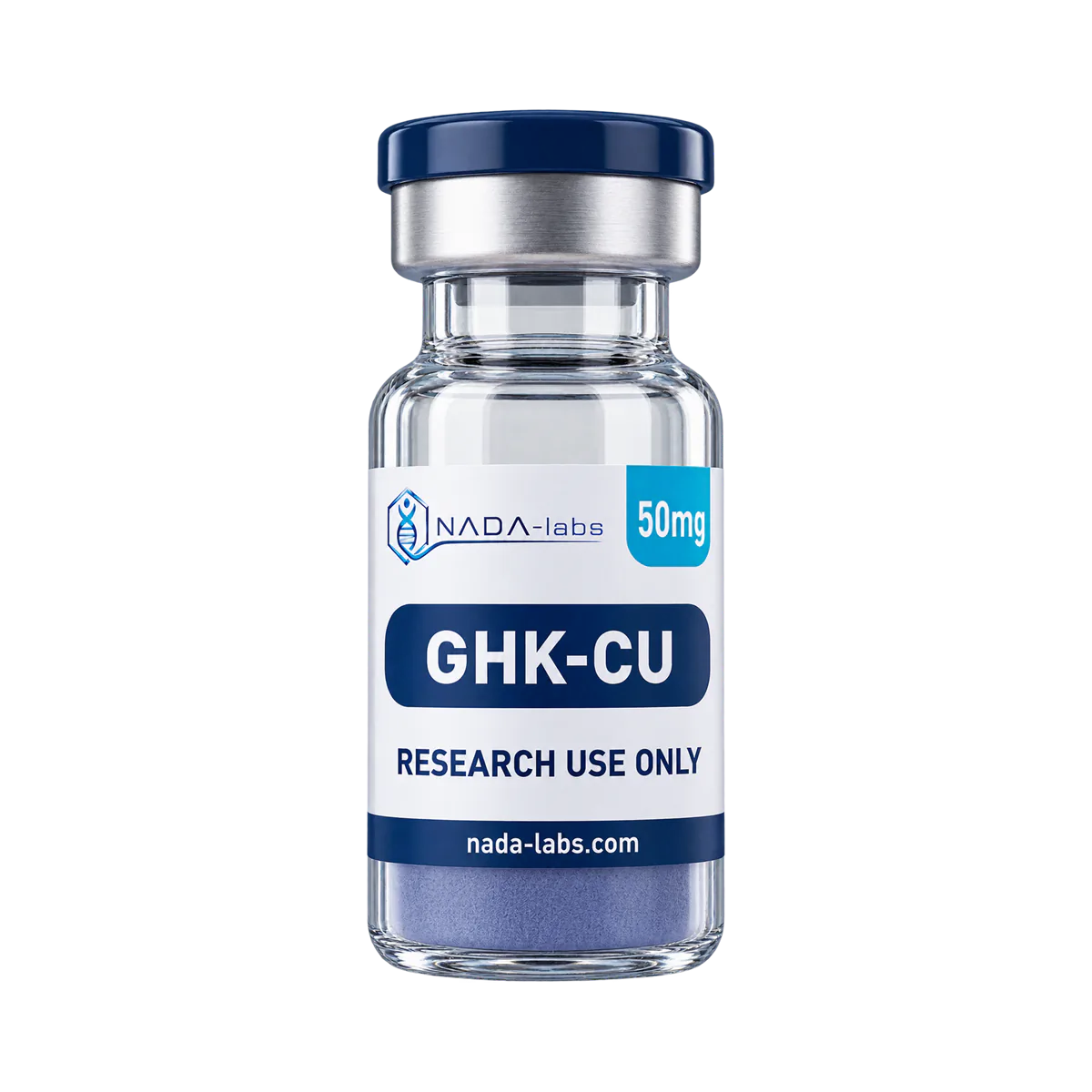
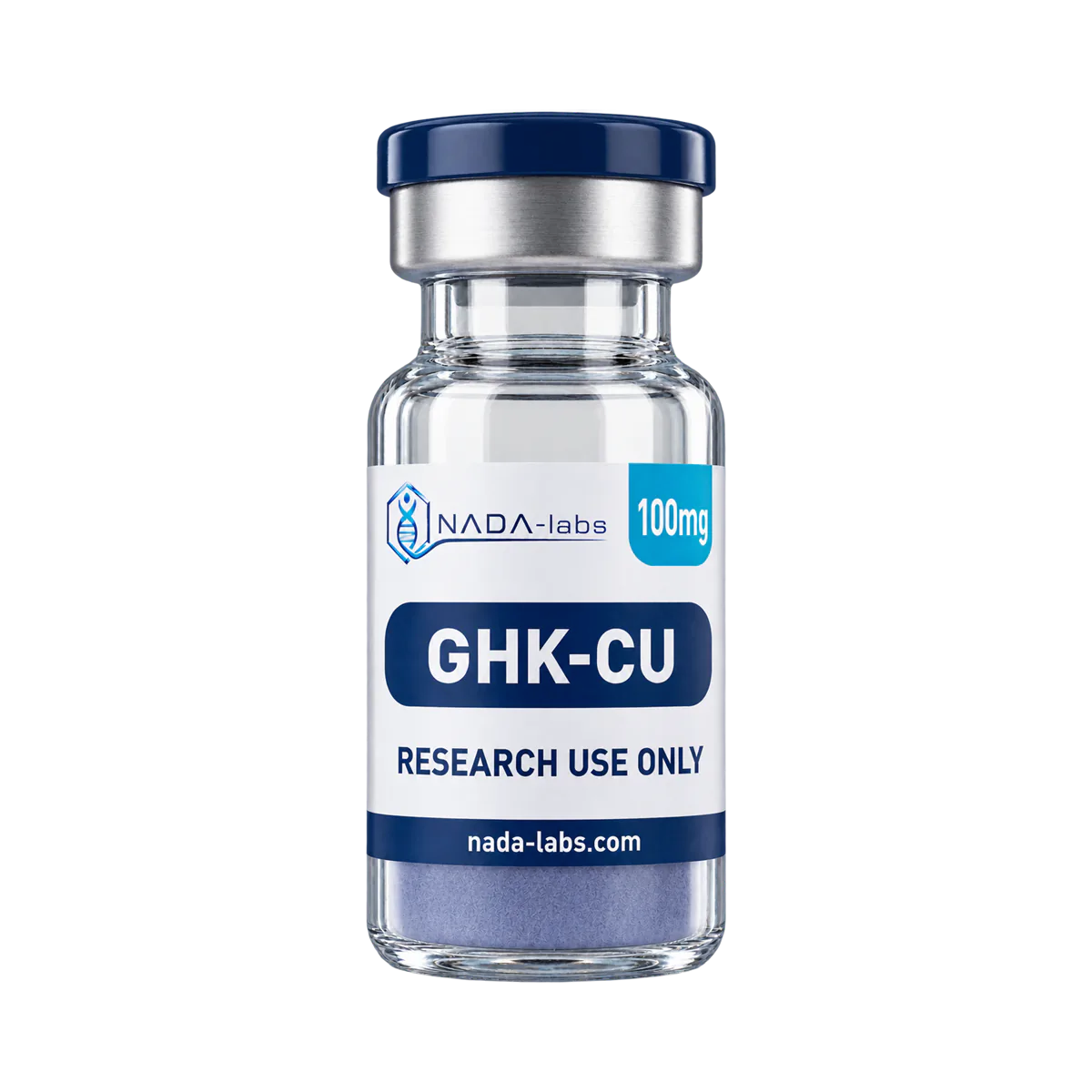
Description
GHK-Cu is the copper(II) complex of the tripeptide glycyl-L-histidyl-L-lysine. The complex gives the lyophilised material its characteristic deep blue colour, which is a useful visual check on identity. Solutions are prepared in sterile water; avoid chelating buffers, which will strip the copper from the complex.
GHK-Cu: what the published research shows
Compiled by NADA-Labs from the peer-reviewed literature cited below. No own study data.
GHK-Cu is the copper(II) complex of the tripeptide glycyl-L-histidyl-L-lysine (GHK), a normal component of human plasma, saliva and urine whose plasma level is reported to be lower in patients with chronic obstructive pulmonary disease than in healthy controls. The published work investigates extracellular-matrix remodeling (collagen, glycosaminoglycan and metalloproteinase expression), anti-inflammatory and antioxidant signaling (NF-kB, p38 MAPK, SIRT1, Nrf2) and copper delivery. It has mainly been studied in rat and mouse wound models, rodent lung-injury and smoke-exposure models and in fibroblast, macrophage or myotube cultures; human data are limited to small trials of topical formulations on wounds and skin.
Evidence base: Predominantly rodent models (rat wound chambers, ischemic rat wounds, rat ACL reconstruction, mouse LPS lung injury, mouse cigarette-smoke exposure) and in vitro cell culture; two small human trials of topical formulations, one randomized evaluator-blinded with n = 86 (no difference from placebo) and one randomized with n = 13. No controlled human study of systemically administered GHK-Cu was identified.
Key studies at a glance
| Study | Model | Design | Main result |
|---|---|---|---|
| Maquart 19931 | Rat subcutaneous wound chamber | Controlled, saline and control-tripeptide groups | Concentration-dependent increase in collagen, GAG, DNA and protein; collagen stimulation 2x non-collagen proteins |
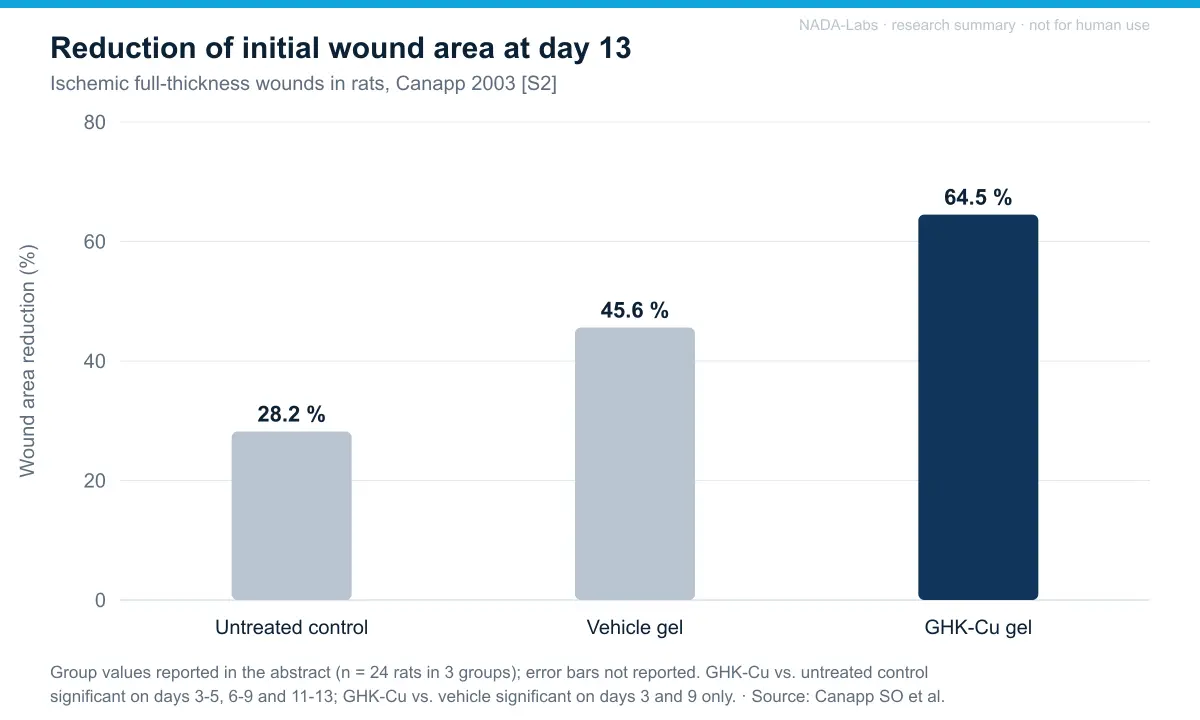
| Canapp 20032 | Ischemic full-thickness wounds, rat (n = 24) | Controlled: GHK-Cu gel vs. vehicle vs. untreated, 13 days | Wound area reduced 64.5 % vs. 45.6 % (vehicle) vs. 28.2 % (control); lower TNF-alpha, MMP-2, MMP-9 |
| Fu 20153 | Rat ACL reconstruction (n = 72) | Randomized, saline-controlled, intra-articular, 4 weeks | Less knee laxity (p = 0.009) and higher graft stiffness (p = 0.026) at 6 weeks; no difference at 12 weeks |
| Park 20164 | LPS lung injury, mouse (n = 7/group) + macrophages | Controlled, intraperitoneal pretreatment, 3 days | Lower lung injury score, ROS, TNF-alpha, IL-6; higher SOD and GSH (p < 0.05); no toxicity reported |
| Deng 20235 | Smoke-exposed mice (n = 8/group) + COPD patient plasma | Controlled in vivo/in vitro; observational plasma (n = 9 vs. 11) | Grip strength 175.5 -> 257.6/339.1 g; fiber CSA 1055 -> 1797/2252 um2; plasma GHK lower in COPD (p = 0.009) |
| Bishop 19926 | Human venous stasis ulcers (n = 86) | Randomized, evaluator-blinded, placebo-controlled, topical | No difference between GHK-Cu cream and placebo; silver sulfadiazine superior |
| Miller 20067 | Human CO2 laser-resurfaced skin (n = 13) | Randomized, blinded evaluation, topical | No difference in erythema or objective wrinkles; patient-rated skin quality higher (p = 0.04) |
Muscle outcomes in smoke-exposed mice (Deng 2023 [S5])
| Outcome | Smoke exposure | Smoke + GHK-Cu (lower level) | Smoke + GHK-Cu (higher level) | p |
|---|---|---|---|---|
| Skeletal muscle weight (% body weight) | 1.19 +/- 0.09 | 1.29 +/- 0.06 | 1.40 +/- 0.05 | < 0.05 |
| Fiber cross-sectional area (um2) | 1055 +/- 552.4 | 1797 +/- 620.9 | 2252 +/- 534.0 | < 0.001 |
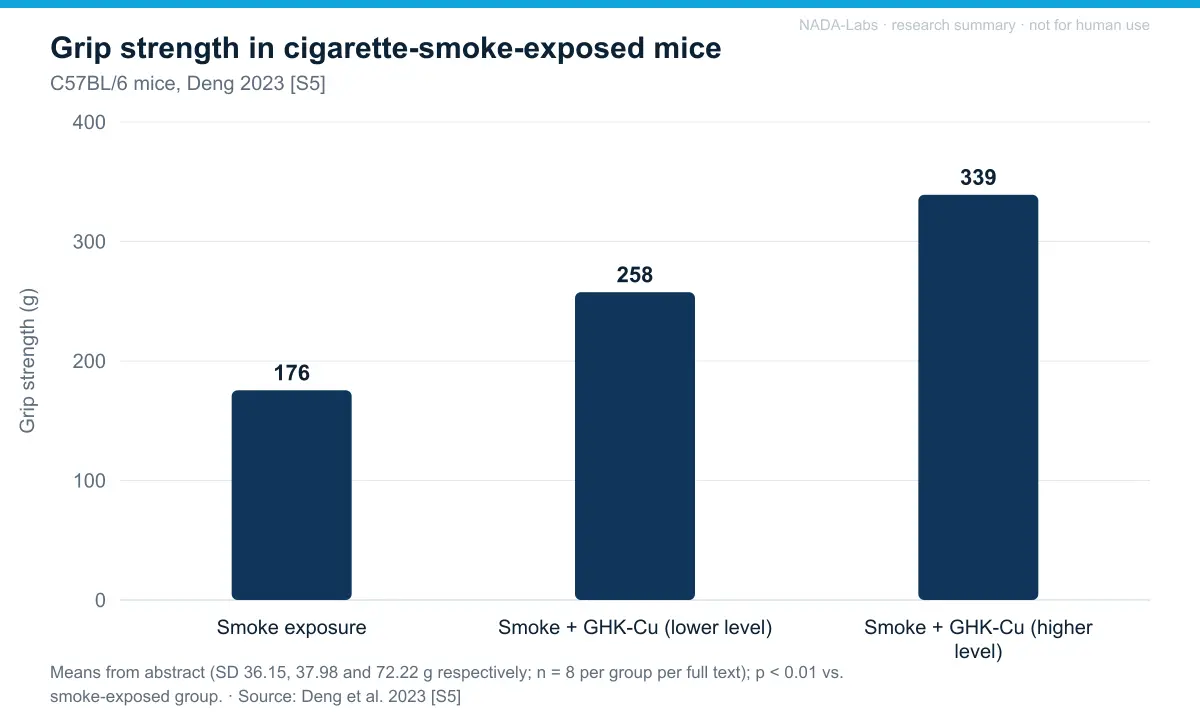
| Grip strength (g) | 175.5 +/- 36.15 | 257.6 +/- 37.98 | 339.1 +/- 72.22 | < 0.01 |
Effects reported in the studies
- Extracellular-matrix accumulation in rodent wounds. In rat wound chambers, GHK-Cu injections produced a concentration-dependent increase in dry weight, DNA, total protein, collagen and glycosaminoglycans, with collagen synthesis stimulated twice as much as non-collagen proteins and type I/III collagen mRNA increased; an unrelated control tripeptide had no effect1.
- Wound closure in ischemic rat wounds. Topical GHK-Cu gel reduced initial wound area by 64.5 % at day 13 vs. 45.6 % with vehicle and 28.2 % untreated; wound TNF-alpha, MMP-2 and MMP-9 were significantly lower in treated wounds than in untreated controls2.
- Ligament graft healing in rats (transient). After ACL reconstruction, intra-articular GHK-Cu reduced side-to-side knee laxity (p = 0.009) and, at the lower concentration, increased graft stiffness (p = 0.026) at 6 weeks, but no differences remained at 12 weeks and ultimate load, gait and histology were unchanged3.
- Anti-inflammatory and antioxidant effects in lung injury models. In LPS-stimulated macrophages GHK-Cu pretreatment significantly reduced ROS (LPS had raised it by 59 %) and TNF-alpha/IL-6 secretion; in LPS-injured mice it lowered the lung injury score, increased SOD and GSH and reduced lavage cytokines (p < 0.05, n = 7/group), with suppression of NF-kB p65 and p38 MAPK phosphorylation4.
- Skeletal muscle preservation in smoke-exposed mice. GHK-Cu raised grip strength from 175.5 g (smoke) to 257.6 g and 339.1 g (p < 0.01), fiber cross-sectional area from 1055 to 1797 and 2252 um2 (p < 0.001) and muscle weight from 1.19 % to 1.29 % and 1.40 % of body weight (p < 0.05); the effect was abolished by a SIRT1 inhibitor5.
- Endogenous GHK levels and disease (observational). Plasma GHK was lower in COPD patients than in healthy controls (70.27 vs. 133.0 ng/mL, p = 0.009) and correlated with pectoralis muscle area (R = 0.684, p = 0.042)5.
- Human topical trials. In a randomized evaluator-blinded trial (n = 86) a GHK-Cu cream did not differ from placebo on venous ulcer size, whereas silver sulfadiazine was superior to both6. In 13 patients after CO2 laser resurfacing, GHK-Cu skin care did not change erythema resolution or objectively assessed wrinkles, but patient-rated skin quality was higher (p = 0.04)7.
Adverse effects and tolerability reported
- No toxicity observed in mice. LPS lung-injury model: GHK-Cu alone did not alter lung histology or cytokine levels and the authors state no toxicity was found after treatment; no effect on macrophage proliferation in vitro4. No apparent cytotoxicity on C2C12 myotubes5.
- Loss of effect after discontinuation. Rat ACL reconstruction: improvements in laxity and stiffness at 6 weeks were absent at 12 weeks after injections stopped; all grafts failed mid-substance regardless of group3.
- No efficacy in human venous ulcers. Randomized evaluator-blinded trial, n = 86: GHK-Cu cream not different from placebo; adverse events not described in abstract6.
- Adverse events not described in human laser-resurfacing study. n = 13, randomized; no differences in erythema resolution; tolerability not reported in abstract7.
- Literature safety notes: biphasic concentration response and delayed fibroblast activation. In human fibroblast cultures, stimulation of glycosaminoglycan synthesis was biphasic, returning to control levels at higher GHK-Cu concentrations (Wegrowski 1992, PMID 1522753). In guinea-pig skin wounds a slower skin reorganization and delayed fibroblast activation were observed with GHK-Cu and analogues, and cultured fibroblasts showed decreased cell reproduction with increased collagen expression (Buffoni 1995, PMID 8836453).
- Literature safety notes: matrix-remodeling and angiogenic signaling. GHK-Cu increased MMP-2 expression and TIMP-1/TIMP-2 secretion in dermal fibroblasts; the MMP-2 effect was reproduced by copper ions but not by GHK alone (Simeon 2000, PMID 11045606). Liposomal GHK-Cu increased HUVEC proliferation by 33.1 %, enhanced VEGF and FGF-2 expression and promoted angiogenesis in a mouse scald model (Wang 2017, PMID 28370978). These remodeling and pro-angiogenic actions are the basis of the theoretical concern about use in tumor-bearing settings; no in vivo tumor-promotion study was identified. In an irradiated rat flap model, topical GHK-Cu gel produced no improvement in flap ischemia (mean ischemic area 5.0 vs. 3.8 cm2 in controls, p = 0.011, not significant at the pre-specified p < 0.01), vessel counts or VEGF (Parker 2013, PMID 23744835).
Limitations of the evidence. Most quantitative efficacy data come from rodent wound, ligament, lung and muscle models with small group sizes (7-8 mice or 24 rats per group). The ischemic-wound study used a commercial gel from the product’s manufacturer (Procyte)2, and the lung-injury study had a co-author from a biotech company4; the lung and muscle studies come from two different groups (Korea, China) with no independent replication identified. The only adequately sized human trial (n = 86) found no benefit of a topical GHK-Cu cream over placebo for venous ulcers6, and the second human study was small (n = 13) with only a subjective endpoint reaching significance7. No controlled human data exist for systemic administration, effects in the rat ACL model were transient, an irradiated-wound rat study was negative, and long-term safety, tumor-related consequences of the pro-angiogenic and MMP-modulating actions, and copper-related toxicity at higher exposures have not been systematically studied.
References
- Maquart FX, Bellon G, Chaqour B, Wegrowski J, Patt LM, Trachy RE, Monboisse JC, Chastang F, Birembaut P, Gillery P, et al. (1993). In vivo stimulation of connective tissue accumulation by the tripeptide-copper complex glycyl-L-histidyl-L-lysine-Cu2+ in rat experimental wounds. Journal of Clinical Investigation. PMID 8227353 DOI
- Canapp SO Jr, Farese JP, Schultz GS, Gowda S, Ishak AM, Swaim SF, Vangilder J, Lee-Ambrose L, Martin FG (2003). The effect of topical tripeptide-copper complex on healing of ischemic open wounds. Veterinary Surgery. PMID 14648529 DOI
- Fu SC, Cheuk YC, Chiu WY, Yung SH, Rolf CG, Chan KM (2015). Tripeptide-copper complex GHK-Cu (II) transiently improved healing outcome in a rat model of ACL reconstruction. Journal of Orthopaedic Research. PMID 25731775 DOI
- Park JR, Lee H, Kim SI, Yang SR (2016). The tri-peptide GHK-Cu complex ameliorates lipopolysaccharide-induced acute lung injury in mice. Oncotarget. PMID 27517151 DOI
- Deng M, Zhang Q, Yan L, Bian Y, Li R, Gao J, Wang Y, Miao J, Li J, Zhou X, Hou G (2023). Glycyl-l-histidyl-l-lysine-Cu2+ rescues cigarette smoking-induced skeletal muscle dysfunction via a sirtuin 1-dependent pathway. Journal of Cachexia, Sarcopenia and Muscle. PMID 36905132 DOI human study
- Bishop JB, Phillips LG, Mustoe TA, VanderZee AJ, Wiersema L, Roach DE, Heggers JP, Hill DP Jr, Taylor EL, Robson MC (1992). A prospective randomized evaluator-blinded trial of two potential wound healing agents for the treatment of venous stasis ulcers. Journal of Vascular Surgery. PMID 1495150 DOI human study
- Miller TR, Wagner JD, Baack BR, Eisbach KJ (2006). Effects of topical copper tripeptide complex on CO2 laser-resurfaced skin. Archives of Facial Plastic Surgery. PMID 16847171 DOI human study
This section summarises findings published in the cited peer-reviewed literature for informational purposes. It is not a claim of efficacy or safety, contains no dosing or administration information by design, and does not constitute medical, veterinary or scientific advice. Results in cell cultures or animal models do not predict effects in humans.