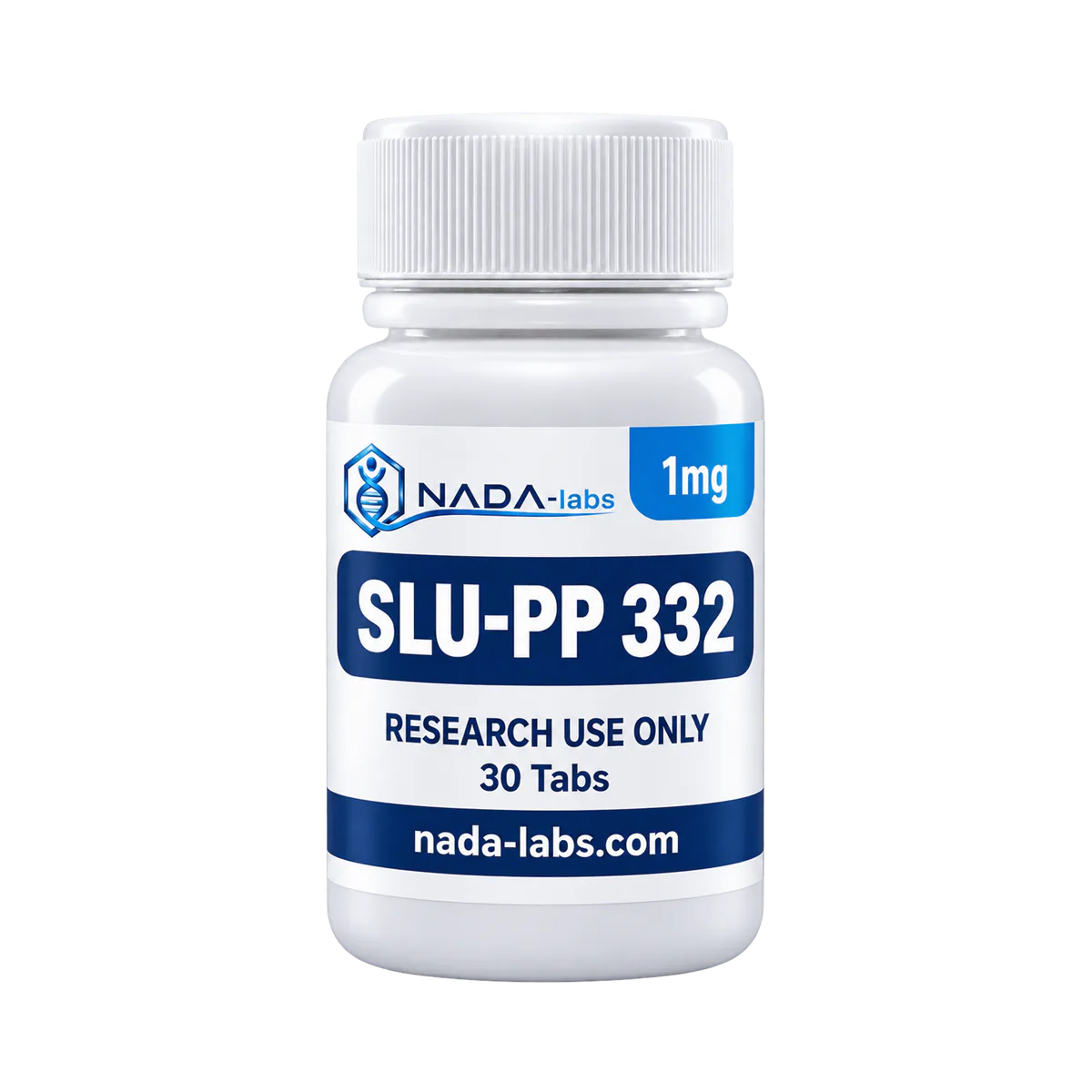
Description
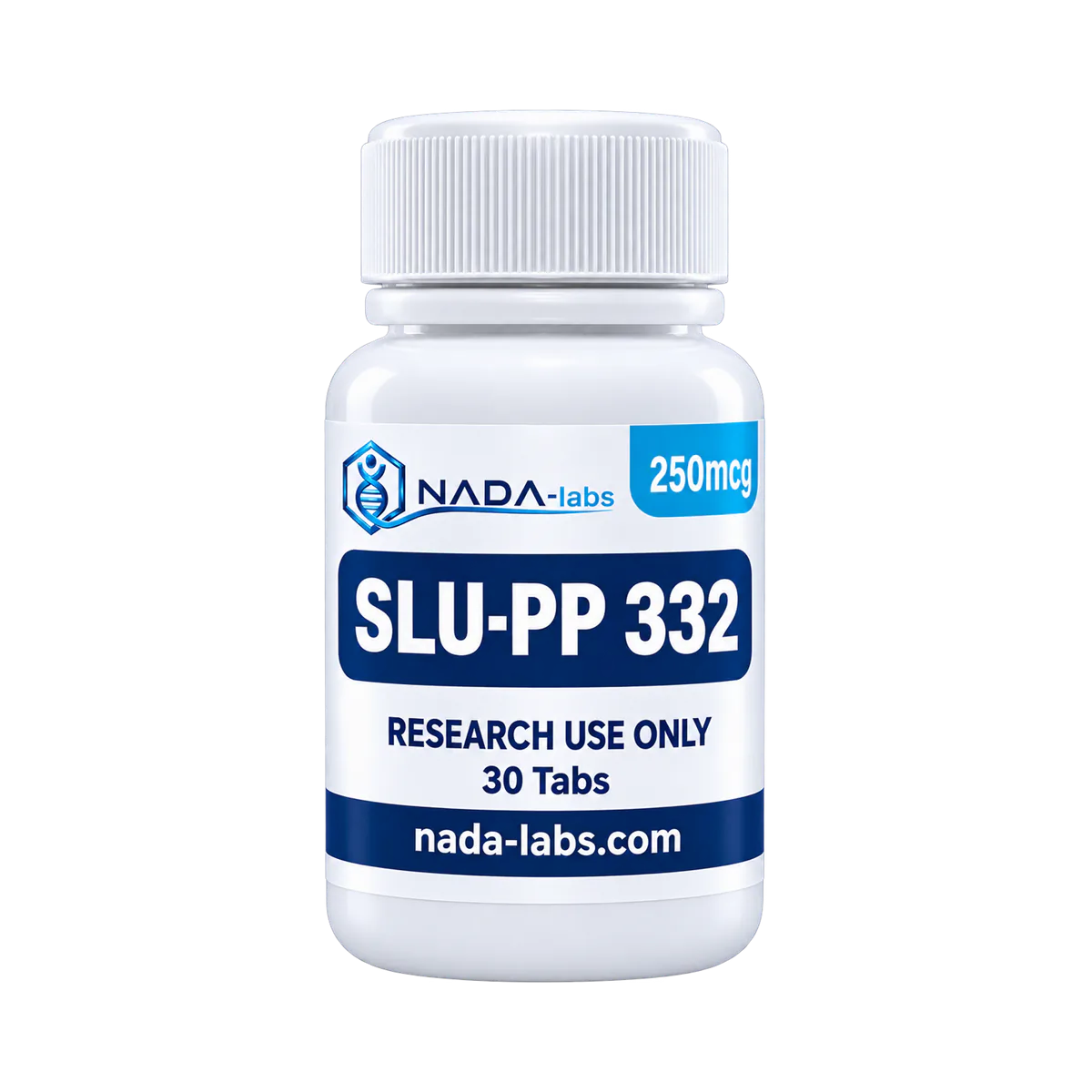
SLU-PP-332 is a synthetic small molecule supplied in tablet form for laboratory use. It is stable at room temperature in a closed container. Identity and purity are confirmed by HPLC on each lot; no CAS number has been assigned to this compound.
SLU-PP-332: what the published research shows
Compiled by NADA-Labs from the peer-reviewed literature cited below. No own study data.
SLU-PP-332 is a synthetic small-molecule pan-agonist of the estrogen-related receptors (ERRα, ERRβ and ERRγ), orphan nuclear receptors that regulate mitochondrial biogenesis, oxidative phosphorylation, fatty acid oxidation and the acute aerobic exercise transcriptional program in skeletal muscle and heart. It was generated by structure-based design at Saint Louis University and Washington University and is used in the literature as a chemical probe and prototype exercise mimetic, with the highest reported potency at ERRα. Published work is concentrated on mouse models of exercise capacity, diet-induced obesity and metabolic syndrome, pressure-overload heart failure and kidney aging, plus in vitro studies in murine C2C12 muscle cells, human primary myoblasts and human liver preparations. A PubMed search for the compound returns ten records and no clinical trial publication type.
Evidence base: Exclusively preclinical: controlled mouse studies (group sizes typically N = 3 to 8, up to N = 4 to 23 across measurements in the heart failure work) and in vitro studies in murine C2C12 cells, human primary myoblasts and human liver S9/microsome preparations. No human interventional data exist. Most in vivo work originates from one collaborative network (Burris, Walker, Elgendy, Billon and colleagues); competing-interest statements in several of these papers declare stock ownership in ERR-agonist companies (Myonid Therapeutics, Pelagos Pharmaceuticals). One independent group has published a human-cell pilot study, and two independent anti-doping laboratories have characterized human in vitro metabolism.
Key studies at a glance
| Study | Model | Design | Main result |
|---|---|---|---|
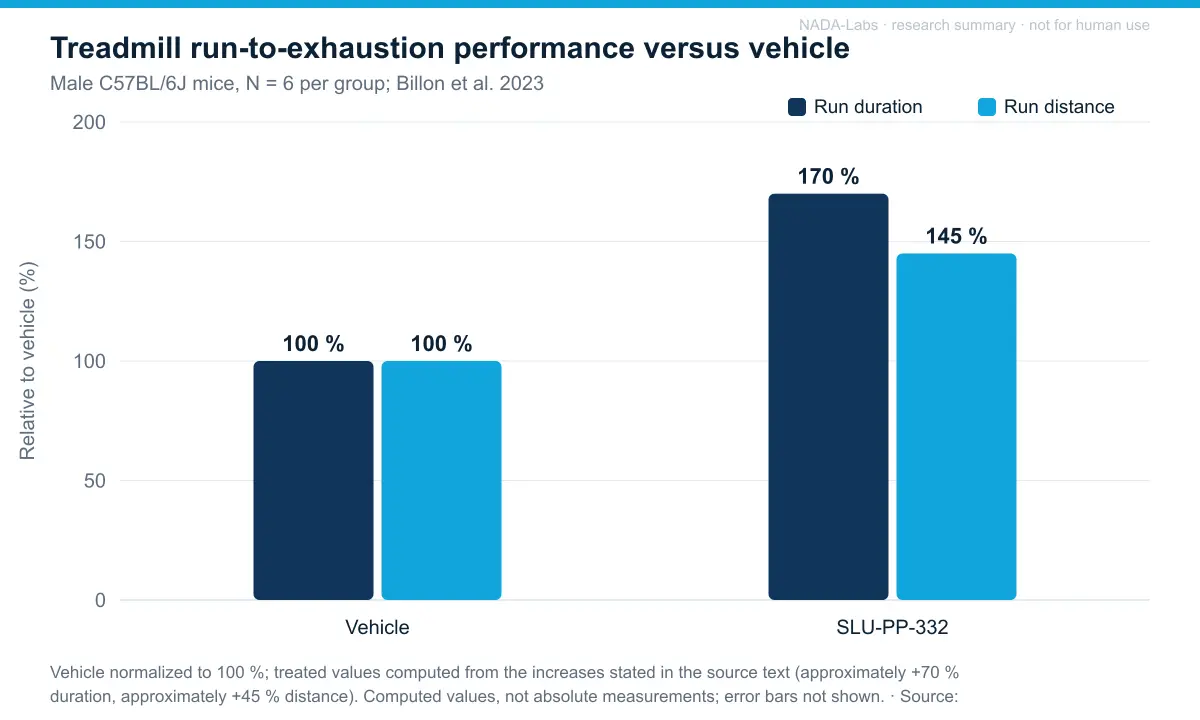
| Billon 20231 | C57BL/6J mice, skeletal-muscle ERRα knockout mice, C2C12 cells | vehicle-controlled, intraperitoneal, roughly one to two weeks, N = 3 to 8 per group | Run duration approximately +70 % and distance approximately +45 % versus vehicle; effect absent in ERRα knockout mice |
| Billon 20242 | Chow-fed, diet-induced obese and ob/ob mice at thermoneutrality | vehicle-controlled, intraperitoneal, 12 to 28 days, N = 7 to 8 per group | Fatty acid oxidation +25 %; body weight approximately 12 % lower and fat mass gain largely prevented under high-fat feeding |
| Xu 20243 | Mouse pressure-overload heart failure (TAC) | vehicle- and sham-controlled, 6 weeks, N = 4 to 23 | Ejection fraction improved from week 4 versus 33.8 % in vehicle (sham 68.2 %); less fibrosis, improved survival for the pooled agonist group (p < 0.05); hypertrophy, stroke volume and cardiac output unchanged |
| Wang 20234 | 21-month-old C57BL/6 mice (aging kidney) | vehicle-controlled, 8 weeks, N = 3 to 6 per group by assay | Albuminuria reduced and podocin increased; respiratory chain genes and assembled complexes up, inflammatory and senescence markers down |
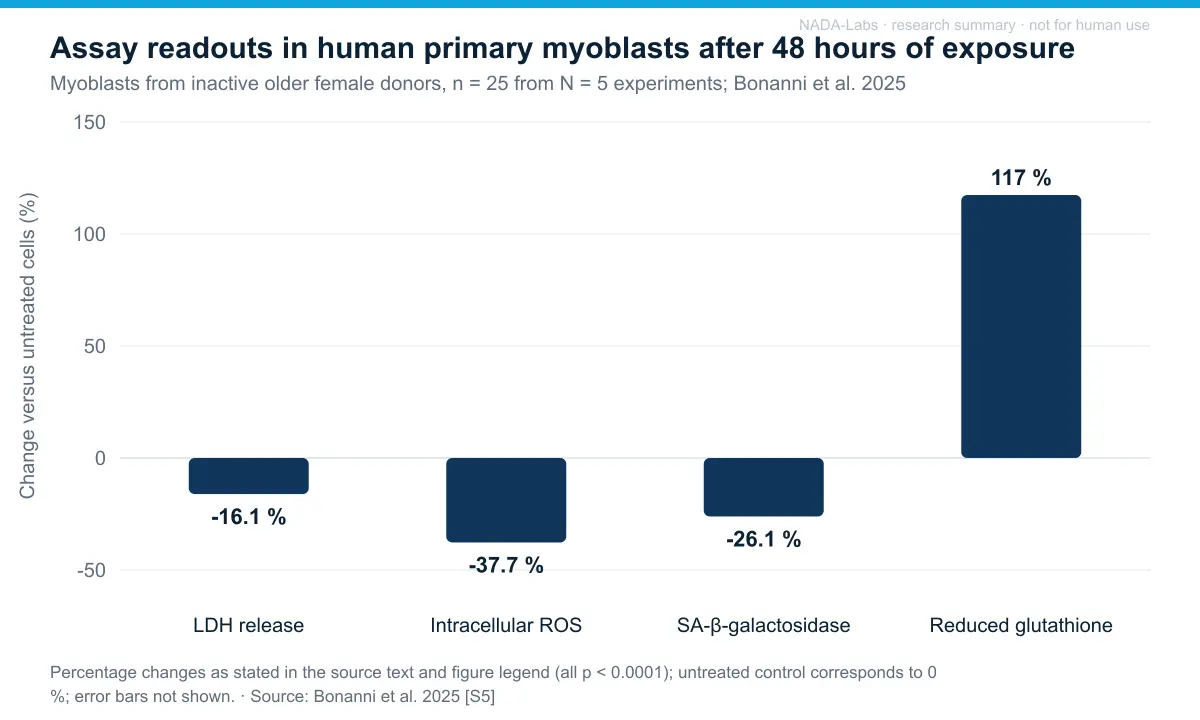
| Bonanni 20255 | Human primary myoblasts from inactive older female donors (in vitro) | treated versus untreated cultures, 48 hours, n = 25 from N = 5 experiments | ROS −37.7 %, LDH −16.1 %, SA-β-gal −26.1 %, glutathione +117.4 % (all p < 0.0001); myotube formation increased |
| Möller 20266 | Human liver S9 fraction and microsomes (in vitro) | analytical characterization by LC-HRMS/MS with NMR confirmation | Nine metabolites of SLU-PP-332 identified (six phase I, three phase II) for doping-control purposes |
| Park 20207 | Human breast cancer cells, spheroids, xenografts, patient tissue | mechanistic, knockdown and overexpression comparisons | ERRα-GREM1 positive feedback loop promotes proliferation and tumour growth; SLU-PP-332 not tested (target-related context only) |
Quantitative outcomes reported in the studies
| Readout | Model | Control | Treated | Study |
|---|---|---|---|---|
| Treadmill run duration | C57BL/6J mice, run to exhaustion | 100 % (vehicle) | approximately +70 % | 1 |
| Treadmill run distance | C57BL/6J mice, run to exhaustion | 100 % (vehicle) | approximately +45 % | 1 |
| Whole-body fatty acid oxidation | Chow-fed mice, 28 days | vehicle | +25 % | 2 |
| Fat mass gained | Diet-induced obese mice, 28 days | approximately 5 g | less than 0.5 g | 2 |
| Body weight | Diet-induced obese mice, 28 days | vehicle | approximately 12 % lower | 2 |
| Ejection fraction at 6 weeks | TAC heart failure mice | 33.8 % (sham 68.2 %) | significantly improved from week 4 | 3 |
| Survival after TAC | TAC heart failure mice | TAC plus vehicle | p < 0.05, log-rank, pooled agonist group | 3 |
| LDH release | Human primary myoblasts, 48 h | untreated (100 %) | −16.1 % (p < 0.0001) | 5 |
| Intracellular ROS | Human primary myoblasts, 48 h | untreated (100.0 ± 2.1) | 62.3 ± 1.9, −37.7 % (p < 0.0001) | 5 |
| SA-β-galactosidase activity | Human primary myoblasts, 48 h | untreated (100.0 ± 4.5) | 73.9 ± 3.7, −26.1 % (p < 0.0001) | 5 |
| Reduced glutathione | Human primary myoblasts, 48 h | untreated (100.0 ± 3.3) | 217.4 ± 7.6, +117.4 % (p < 0.0001) | 5 |
| In vitro metabolites | Human liver S9 and microsomes | not applicable | 9 metabolites (6 phase I, 3 phase II) | 6 |
Effects reported in the studies
- Aerobic exercise capacity in mice. In a vehicle-controlled run-to-exhaustion treadmill test, treated C57BL/6J mice ran approximately 70 % longer and approximately 45 % further than vehicle controls (N = 6 per group), and grip strength was higher at day 6 and day 13 (N = 8 per group, reported qualitatively)1. The endurance effect was absent in skeletal-muscle-specific ERRα knockout mice while treated floxed controls improved significantly (N = 5 per group), identifying ERRα as the mediator1.
- Acute exercise transcriptional program in skeletal muscle. Treatment induced Ddit4, the most strongly upregulated gene shared between gastrocnemius and quadriceps, together with Slc25a25 and other components of the DDIT4/REDD1 acute aerobic exercise program; the treatment-induced gene set overlapped significantly with genes regulated in human quadriceps after a single bout of aerobic cycling (p < 2.2 × 10⁻¹⁶, Fisher exact test)1. Fold-change magnitudes are presented graphically in the source and are not stated numerically.
- Substrate use and energy expenditure in mice. In chow-fed mice, whole-body fatty acid oxidation calculated from indirect calorimetry increased by 25 % relative to vehicle, with an acute fall in respiratory exchange ratio within 2 hours of the first administration and a reciprocal decrease in carbohydrate utilization, while food intake, lean mass and locomotor activity were unchanged2. Resting energy expenditure was elevated in ob/ob mice without change in food intake2.
- Fat mass and metabolic parameters in obese mice. Over 28 days on a high-fat diet, vehicle-treated mice gained approximately 5 g of fat mass versus less than 0.5 g in treated mice, and treated mice weighed approximately 12 % less; fasting plasma glucose and insulin were lower while fed glucose and the insulin tolerance test were unchanged, and hepatic steatosis, adipocyte size, plasma total cholesterol, HDL and triglycerides decreased2. In lean chow-fed mice, body weight was unchanged and only fat mass gain was reduced2.
- Cardiac function under pressure overload in mice. In the transverse aortic constriction model, ejection fraction fell to 33.8 % in vehicle-treated mice at 6 weeks versus 68.2 % in sham animals; SLU-PP-332 improved ejection fraction from week 4 onward, reduced fibrosis and was associated with improved survival for the pooled agonist group (log-rank p < 0.05), without altering cardiac hypertrophy, and without improving stroke volume or cardiac output3. Genetic dependency experiments identified ERRγ as the main mediator3.
- Mitochondrial function and inflammation in the aging mouse kidney. Eight weeks of treatment in 21-month-old mice significantly reduced albuminuria and increased podocin expression, and increased respiratory chain subunit gene expression (Ndufb8, Sdhc, Uqcrb, Cox6a2, Atp5b) and assembled complexes I to V, while IL-1β, TNF-α, CCR5, TIMP1, ICAM1, phospho-STAT3 and Cdkn1a/p21 decreased; p16^Ink4a was unaffected4.
- Human muscle cells in vitro. In primary myoblasts from inactive older women, 48 hours of exposure reduced LDH release by 16.1 %, intracellular ROS by 37.7 % and senescence-associated β-galactosidase activity by 26.1 %, and increased reduced glutathione by 117.4 % versus untreated cells (all p < 0.0001, n = 25 from N = 5 experiments), with NOX4 downregulated and SIRT1, PGC-1α, ERRα, FNDC5, Akt and Bcl-2 upregulated to levels comparable to cells from active donors5. These are cell-culture endpoints and are not measures of a physiological effect in a person.
- Scope and limits of the reported magnitudes. All efficacy findings derive from rodent models and cell culture. The reported magnitudes (run duration approximately +70 % and distance approximately +45 %, fatty acid oxidation +25 %, near-complete prevention of fat mass gain under high-fat feeding) describe those models only and have not been examined in humans1,2. SLU-PP-332 lacks oral bioavailability, which is given as the reason a chemically distinct successor compound was developed (Billon et al., J Pharmacol Exp Ther 2026, PMID 41421047). Human liver preparations metabolize the compound extensively, with nine metabolites reported in one laboratory and 22 in another6.
Adverse effects and tolerability reported
- Limited tolerability reporting in rodent studies. In diet-induced obese mice, 28 days of treatment produced no increase in liver enzyme levels; in chow-fed mice the authors report only relatively minor changes in plasma cholesterol and liver enzyme levels versus vehicle2. The exercise-capacity, kidney-aging and heart-failure papers report no tolerability endpoints for SLU-PP-332; the explicit no-overt-toxicity statement in the heart failure paper refers to the comparator compound SLU-PP-915, not to SLU-PP-3321,3,4.
- Reduced cell viability at higher in vitro concentrations. A concentration-response viability assay in human primary myoblasts showed progressively declining viability as the concentration increased, and a half-maximal inhibitory concentration was determined; the experimental condition was chosen from the non-cytotoxic part of the curve5.
- Downregulation of cell cycle and developmental gene pathways. In cardiomyocytes from TAC mice, ERR agonism downregulated cell cycle and developmental pathways, partially mediated by E2F1. The consequence of this transcriptional shift in other tissues was not assessed3.
- Mechanism-based oncology concern for the ERRα target. Independent cancer research identifies ERRα as a tumour-promoting node in breast cancer models, where ERRα drives GREM1 expression in a positive feedback loop associated with proliferation, spheroid invasion and xenograft growth, and proposes the axis as a target for inhibition7. No published study has examined SLU-PP-332 in a tumour model, so this is a theoretical, mechanism-based concern rather than an observed effect of the compound.
- No human safety data; relevance for doping control. A PubMed search returns ten records for the compound and no publication with a clinical trial publication type, so no human tolerability or adverse-event data exist. Anti-doping laboratories have characterized human in vitro metabolism (nine metabolites in liver S9 and microsomes6; 22 metabolites in an independent laboratory, PMID 41688415) specifically to detect misuse, and exercise mimetics and metabolic modulators are prohibited in sport6.
Limitations of the evidence. The evidence base for SLU-PP-332 is recent and entirely preclinical: no clinical trial publication is indexed in PubMed, and every efficacy result listed here comes from rodent models or cell culture with small group sizes (commonly N = 3 to 8 per group). Most in vivo work originates from one collaborative network, and competing-interest statements in several of these papers declare stock ownership in companies developing ERR agonists (Myonid Therapeutics, Pelagos Pharmaceuticals), so independent replication of the in vivo findings is limited; the human-cell study is a small, single-centre, unblinded pilot. Several key effects are reported graphically or qualitatively rather than as exact numbers, notably the acute-exercise gene induction fold changes, which could not be verified numerically from the text. Tolerability was assessed only through liver enzymes and plasma lipids in one metabolic study; the frequently cited no-overt-toxicity statement in the heart failure paper applies to a different compound. Mechanism-based safety questions, in particular the role of ERRα in tumour biology and the transcriptional downregulation of cell cycle pathways, have not been addressed in any dedicated toxicology or carcinogenicity study.
References
- Billon C, Sitaula S, Banerjee S, Welch R, Elgendy B, Hegazy L, Oh TG, Kazantzis M, Chatterjee A, Chrivia J, Hayes ME, Xu W, Hamilton A, Huss JM, Zhang L, Walker JK, Downes M, Evans RM, Burris TP (2023). Synthetic ERRα/β/γ Agonist Induces an ERRα-Dependent Acute Aerobic Exercise Response and Enhances Exercise Capacity. ACS Chemical Biology. PMID 36988910 DOI
- Billon C, Schoepke E, Avdagic A, Chatterjee A, Butler AA, Elgendy B, Walker JK, Burris TP (2024). A Synthetic ERR Agonist Alleviates Metabolic Syndrome. Journal of Pharmacology and Experimental Therapeutics. PMID 37739806 DOI
- Xu W, Billon C, Li H, Wilderman A, Qi L, Graves A, Rideb JRDC, Zhao Y, Hayes M, Yu K, Losby M, Hampton CS, Adeyemi CM, Hong SJ, Nasiotis E, Fu C, Oh TG, Fan W, Downes M, Welch RD, Evans RM, Milosavljevic A, Walker JK, Jensen BC, Pei L, Burris T, Zhang L (2024). Novel Pan-ERR Agonists Ameliorate Heart Failure Through Enhancing Cardiac Fatty Acid Metabolism and Mitochondrial Function. Circulation. PMID 37961903 DOI
- Wang XX, Myakala K, Libby AE, Krawczyk E, Panov J, Jones BA, Bhasin K, Shults N, Qi Y, Krausz KW, Zerfas PM, Takahashi S, Daneshpajouhnejad P, Titievsky A, Taranenko E, Billon C, Chatterjee A, Elgendy B, Walker JK, Albanese C, Kopp JB, Rosenberg AZ, Gonzalez FJ, Guha U, Brodsky L, Burris TP, Levi M (2023). Estrogen-Related Receptor Agonism Reverses Mitochondrial Dysfunction and Inflammation in the Aging Kidney. The American Journal of Pathology. PMID 37717940 DOI
- Bonanni R, Falvino A, Matticari A, Rinaldi AM, D’Arcangelo G, Cifelli P, Iundusi R, Gasbarra E, Tancredi V, Cariati I, Tarantino U (2025). Targeting ERRs to counteract age-related muscle atrophy associated with physical inactivity: a pilot study. Frontiers in Physiology. PMID 40692696 DOI
- Möller T, Krug O, Thevis M (2026). In Vitro Metabolism and Analytical Characterization of SLU-PP-332 and SLU-PP-915: Novel Pan-ERR Agonists With Doping Potential. Rapid Communications in Mass Spectrometry. PMID 41588687 DOI
- Park SA, Sung NJ, Choi BJ, Kim W, Kim SH, Surh YJ (2020). Gremlin-1 augments the oestrogen-related receptor α signalling through EGFR activation: implications for the progression of breast cancer. British Journal of Cancer. PMID 32572171 DOI
This section summarises findings published in the cited peer-reviewed literature for informational purposes. It is not a claim of efficacy or safety, contains no dosing or administration information by design, and does not constitute medical, veterinary or scientific advice. Results in cell cultures or animal models do not predict effects in humans.