Description
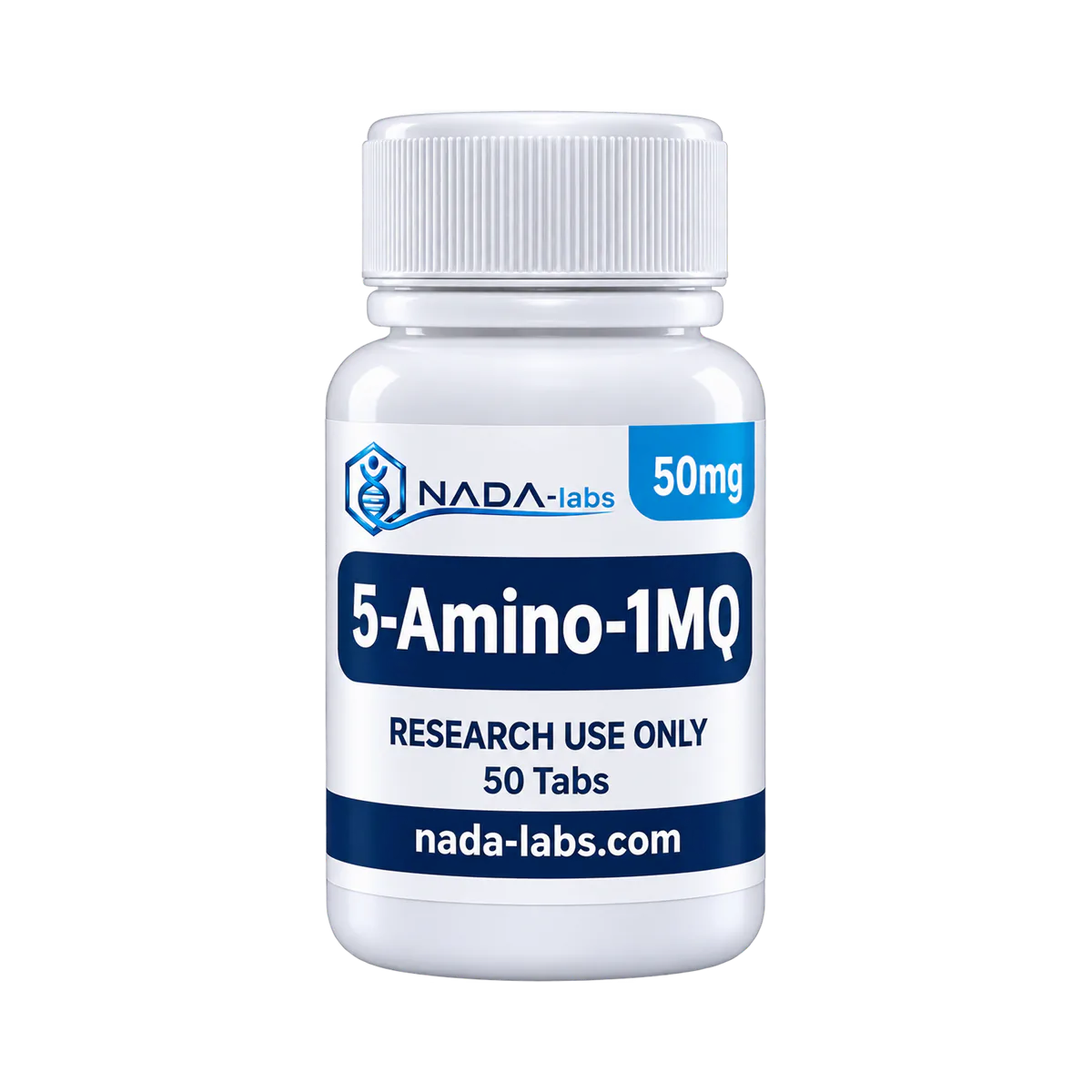
5-Amino-1-methylquinolinium is a small molecule rather than a peptide, supplied in tablets at 50 mg per tablet. Unlike the lyophilised vials in our range it does not require refrigeration — store the bottle closed, dry and at room temperature.
5-Amino-1MQ: what the published research shows
Compiled by NADA-Labs from the peer-reviewed literature cited below. No own study data.
5-Amino-1MQ (5-amino-1-methylquinolinium; 5A1MQ) is a small-molecule methylquinolinium compound developed as an inhibitor of nicotinamide N-methyltransferase (NNMT), a cytosolic enzyme that transfers a methyl group from S-adenosyl-L-methionine (SAM) to nicotinamide to form 1-methylnicotinamide (1-MNA). In artificial-membrane and Caco-2 assays the compound showed high permeability by passive and active transport, and in enzyme panels it did not significantly inhibit the structurally related methyltransferases DNMT1 and PRMT3 or, in any concentration-dependent manner, COMT and the NAD+ salvage enzymes NAMPT and SIRT11. The published literature is entirely preclinical: cultured pre-adipocytes, adipocytes and myoblasts, diet-induced obese mice, aged mice with muscle injury or exercise training, a hindlimb ischemia model, and a syngeneic bladder tumor model. No clinical or human study of the compound was identified.
Evidence base: In vitro and rodent work only; a PubMed search for the compound and its synonyms returned no human study. Three of the seven studies declare commercial conflicts of interest: the senior author of the metabolic and skeletal-muscle series founded Ridgeline Therapeutics and several co-authors are or were employees of that company (3, 4, 5). The two earliest studies from the same academic group declare no conflict of interest (1, 2). Two independent groups report controlled experiments with the same compound: a peripheral artery disease model (6) and bladder cancer models (7). Group sizes are small throughout (typically 6-13 animals per arm).
Key studies at a glance
| Study | Model | Design | Main result |
|---|---|---|---|
| Neelakantan 20181 | 3T3-L1 adipocytes; diet-induced obese mice | Controlled, vehicle vs. inhibitor over 11 days (n = 9 per cohort) | ~5.1 % body weight loss vs. ~1.4 % gain in controls; EWAT mass ~35 % lower; cholesterol ~30 % lower; food intake unchanged |
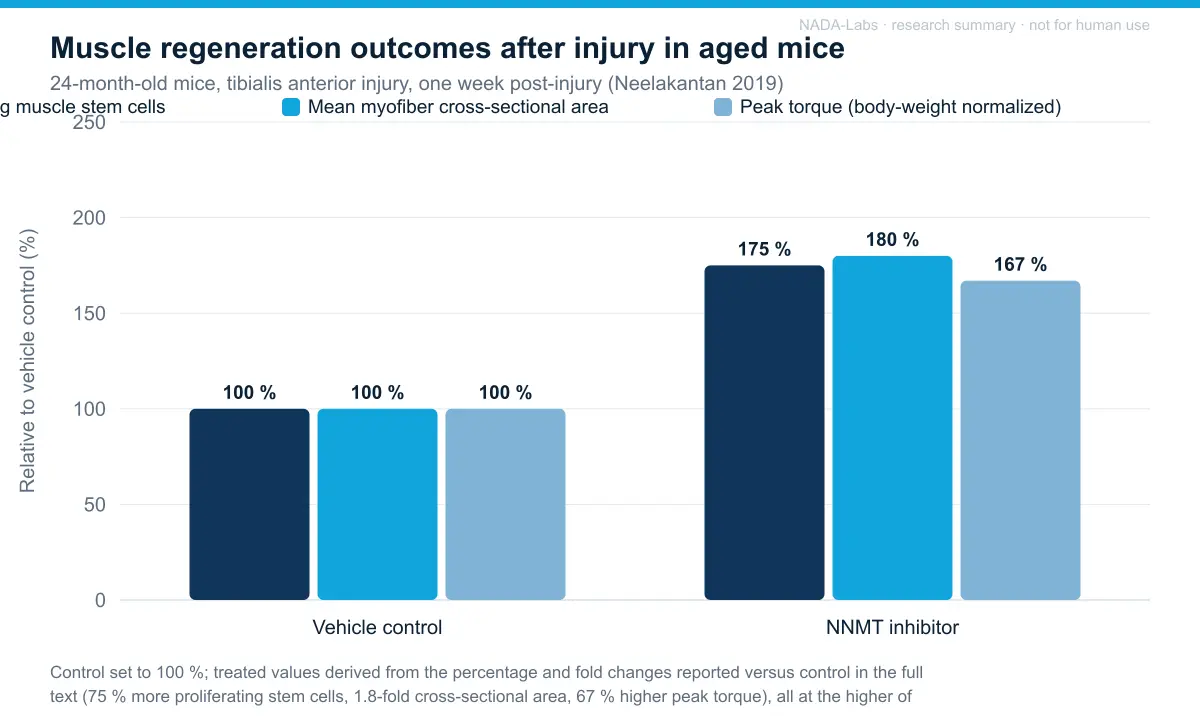
| Neelakantan 20192 | 24-month-old mice, induced muscle injury; C2C12 cells | Controlled, blinded histological scoring, one- and three-week post-injury cohorts (48 mice) | Proliferating muscle stem cells 60-75 % higher; myofiber cross-sectional area 1.8-fold; peak torque 67 % higher |
| Sampson 20213 | Diet-induced obese mice switched to a lean diet | Randomized, four arms, 7-week study (n = 6-8 per group) | Fat mass loss ~29.3 % vs. 2.9 % with diet switch alone; liver fat > 45 % lower; lean mass to body weight ratio +6.4 % |
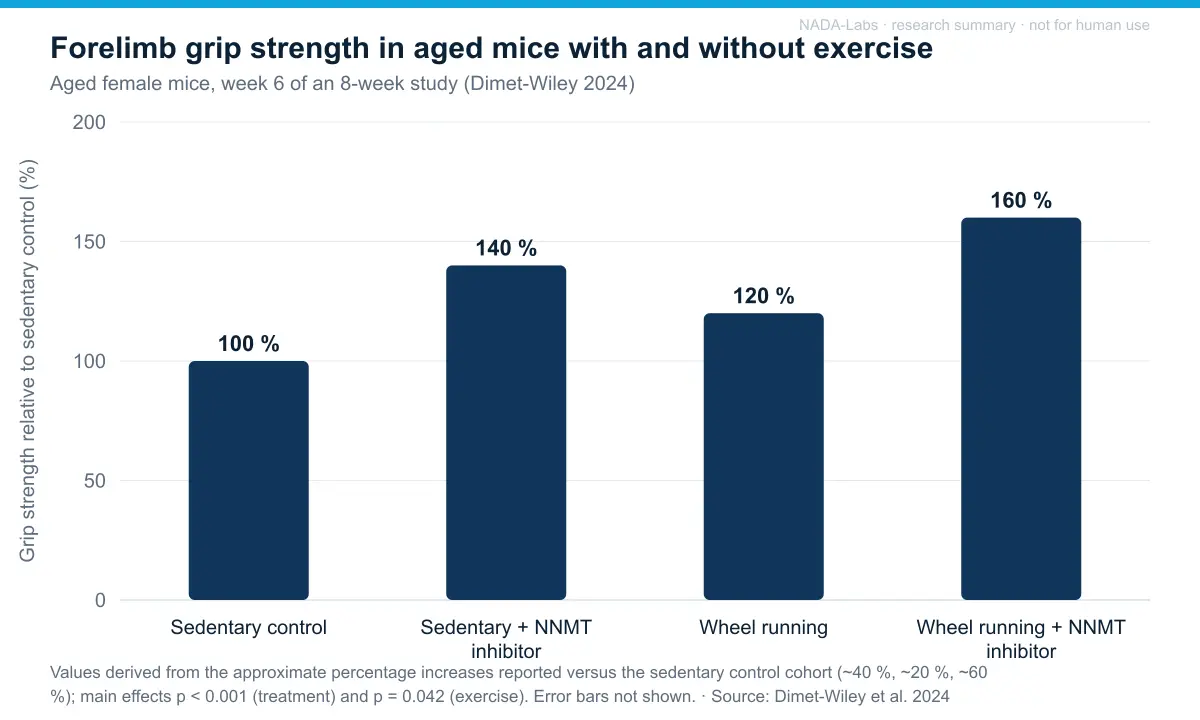
| Dimet-Wiley 20244 | Aged female mice, sedentary or wheel running | 2 × 2 factorial, 8 weeks (n = 7-10 per cohort) | Grip strength ~40 % higher (sedentary treated) and ~60 % higher (treated plus exercise); intramyocellular lipid > 30 % lower; peak torque unchanged |
| Babula 20245 | Diet-induced obese mice | Controlled, vehicle vs. inhibitor over 28 days, plus pharmacokinetics | Improved glucose tolerance and insulin sensitivity; attenuated hepatic steatosis; transaminases normalized (no figures in abstract) |
| Dong 20256 | BALB/cJ mice, hindlimb ischemia (peripheral artery disease) | Randomized, placebo-controlled, blinded, tissues at 21 days (n = 24) | Absolute force p < 0.0001, specific force p = 0.0035, power p = 0.0305, total work p = 0.0367; perfusion, capillary density and fiber size unchanged |
| Yang 20247 | Syngeneic mouse bladder tumor model; human cohorts | Controlled, four arms including anti-PD-L1 antibody (n = 6 per group) | Reduced tumor burden, increased necrosis, lower Ki-67; enhanced antibody effect (not quantified) |
Reported quantitative outcomes, control versus treated
| Outcome | Model | Control | NNMT inhibitor | Study |
|---|---|---|---|---|
| Body weight change over the treatment period | Diet-induced obese mice, 11 days | +0.6 ± 0.4 g (~+1.4 %) | −2.0 ± 0.6 g (~−5.1 %) | 1 |
| Epididymal white adipose tissue mass | Diet-induced obese mice, 11 days | Reference | ~35 % lower (p < 0.001) | 1 |
| Plasma total cholesterol | Diet-induced obese mice, 11 days | Reference | ~30 % lower (p < 0.05) | 1 |
| Cumulative food intake | Diet-induced obese mice, 11 days | 28.1 ± 1.2 g | 26.2 ± 1.4 g (n.s.) | 1 |
| Fat mass change from baseline | Obese mice on lean-diet switch, 7 weeks | −2.9 % (diet switch alone) | −29.3 % (diet switch plus inhibitor) | 3 |
| Cumulative body weight loss | Obese mice on lean-diet switch, 7 weeks | −2.9 g | −6.3 g | 3 |
| Proliferating muscle stem cells | Aged mice, one week post-injury | Reference | 75 % higher (p = 0.0007) | 2 |
| Mean myofiber cross-sectional area | Aged mice, one week post-injury | Reference | 1.8-fold (p = 0.0052) | 2 |
| Peak torque normalized to body weight | Aged mice, one week post-injury | Reference | 67 % higher (p = 0.033) | 2 |
| Forelimb grip strength, week 6 | Aged sedentary mice | Reference (sedentary saline) | ~40 % higher (main effect p < 0.001) | 4 |
| Intramyocellular lipid content | Aged sedentary mice, gastrocnemius | Reference | > 30 % lower | 4 |
| Absolute plantarflexor force | Hindlimb ischemia, tissues at 21 days | Placebo | Higher (p < 0.0001) | 6 |
| Myofiber cross-sectional area | Hindlimb ischemia, tissues at 21 days | Placebo | No difference | 6 |
Effects reported in the studies
- Body weight and fat mass in diet-induced obesity (rodent). In obese mice, subcutaneous administration over 11 days produced a ~5.1 % body weight loss from baseline while controls gained ~1.4 %, with ~35 % lower epididymal fat mass and > 30 % smaller adipocytes and no change in food intake1. Combined with a lean-diet switch over a 7-week study, fat mass fell ~29.3 % from baseline versus 2.9 % with the diet switch alone, and cumulative weight loss was 6.3 g versus 2.9 g3. A 28-day controlled study reported limited body weight and fat mass gain relative to vehicle, without figures in the abstract5.
- Lipid metabolism and liver pathology (rodent and cell culture). Plasma total cholesterol was ~30 % lower than in vehicle-treated obese mice (p < 0.05)1; liver fat content in the median lobe was reduced by more than 45 % and steatosis scores returned to the range of lean controls when treatment was combined with a lean diet (micro- p = 0.0425, macrovesicular p = 0.0039)3; a separate obese-mouse study reported attenuated hepatic steatosis with normalized alanine and aspartate transaminase and ketone body levels5. In differentiating pre-adipocytes, lipid accumulation was 50-70 % lower than in untreated cells (p = 0.0001)1.
- Muscle regeneration after injury in aged animals (rodent and cell culture). In 24-month-old mice with induced muscle injury, proliferating muscle stem cells were 60 % and 75 % more abundant than in controls (p = 0.013 and p = 0.0007), mean myofiber cross-sectional area was 1.8-fold larger at one week (p = 0.0052) and 1.5-fold larger at three weeks (p = 0.039), while the total stem cell pool was unchanged (209 ± 23 vs. 213 ± 44 vs. 205 ± 9 cells/mm²)2. In C2C12 cells, MHC-positive myotube nuclei rose from 12 ± 0.4 % to 18 ± 0.03 % (a 45 % increase; treatment factor p = 0.0008)2.
- Muscle strength and functional performance (rodent). Body-weight-normalized peak torque of the injured muscle was 67 % higher than in controls (p = 0.033), while torque per unit fiber area was unchanged2. In aged mice, grip strength was ~40 % greater in treated sedentary animals and ~60 % greater with treatment plus wheel running, versus sedentary controls (main effects p < 0.001 treatment, p = 0.042 exercise), whereas peak plantarflexor torque was unchanged4. In an independent hindlimb ischemia model, absolute force (p < 0.0001), specific force (p = 0.0035), power (p = 0.0305) and total work (p = 0.0367) exceeded placebo without change in muscle mass, fiber size or limb perfusion6.
- Enzyme inhibition and cellular metabolite shifts (mechanistic, in vitro). In differentiated adipocytes the compound lowered intracellular 1-MNA in a concentration-dependent manner, with levels plateauing at ~40 % of untreated cells, while NAD+ rose ~1.2-1.6-fold and SAM increased significantly at higher concentrations; DNMT1 and PRMT3 were not inhibited, and COMT, NAMPT and SIRT1 showed only minimal, non-concentration-dependent inhibition at the extremes tested1. In differentiated myotubes the NAD+/NADH ratio fell 25 % and 40 % (p = 0.0443; p = 0.0024), driven by higher NADH rather than lower NAD+2, and intramyocellular lipid content in aged muscle fell more than 30 %4.
- Tumor models (rodent). In a syngeneic bladder tumor model driven by NNMT-overexpressing fibroblasts, the inhibitor reduced tumor burden versus vehicle, increased necrosis and lowered the Ki-67 proliferation index, and enhanced the apoptotic effect of an anti-PD-L1 antibody (n = 6 per group); the reported effects are directional and are not quantified numerically in the source7.
Adverse effects and tolerability reported
- No adverse effects or systemic toxicity reported in the rodent studies. In obese mice, administration over 11 days produced no observable adverse effects and no change in food intake (cumulative intake 26.2 ± 1.4 g vs. 28.1 ± 1.2 g)1; in aged injured mice a serum chemistry panel showed no significant differences from controls and the regimen was described as well tolerated2; in the 7-week diet-switch study the authors report no adverse effects, with serum chemistry markers not significantly different between groups except total protein and albumin3; the placebo-controlled ischemia study reports no adverse effects6.
- Cytotoxicity in cell culture at concentrations far above the active range. In 3T3-L1 pre-adipocytes, modest cytotoxicity appeared only well above the NNMT-inhibitory range (p < 0.01 versus untreated cells), with ~40 % cytotoxicity at the highest concentration tested; viability was unaffected at the concentrations used for efficacy experiments, and higher concentrations were not tested in the 1-MNA assays because of the known cytotoxicity1.
- Reduced cumulative work during a fatigue protocol. In aged mice, treated animals performed significantly less cumulative work across a 54-bout plantarflexor fatigue test, which the authors relate to force output per contraction; susceptibility to fatigue itself showed only a trend (p = 0.098)4.
- Functional effects without corresponding structural or vascular change in one model. In the hindlimb ischemia model, limb perfusion, capillary density, muscle mass and myofiber cross-sectional area were unchanged versus placebo, and the reduction in foot necrosis severity did not reach significance (p = 0.08), so the reported functional gains were not accompanied by structural or perfusion changes6.
- Position of the target in NAD+ and methyl-donor metabolism, and tumor biology. NNMT sits at the junction of the NAD+ salvage pathway and SAM-dependent methylation; inhibition raised intracellular NAD+ and SAM in adipocytes1 and shifted the NAD+/NADH ratio in myotubes2. In the one tumor model examined the reported direction of effect is anti-tumor (reduced tumor burden, increased necrosis, lower Ki-67)7. No retrieved study examined long-term consequences of sustained NNMT inhibition on NAD+ and methyl-donor metabolism in healthy animals, and no human safety data were identified.
Limitations of the evidence. All identified work on 5-amino-1MQ is preclinical: cultured cells and rodent models, with no clinical or human pharmacokinetic study found, so none of the reported effects has been demonstrated in humans. The metabolic and skeletal-muscle literature comes largely from one research group, and three of those publications declare commercial conflicts of interest linked to a company developing NNMT inhibitors (3, 4, 5). Group sizes are small, typically 6-13 animals per arm, which limits precision. Results are model-dependent: in the independent ischemia study force output improved while muscle mass, fiber size and perfusion did not change (6), and in aged mice fiber size increased only when treatment was combined with exercise (4). Several key outcomes are reported as approximate percentages or fold changes rather than tabulated means with dispersion, and long-term consequences of sustained NNMT inhibition on NAD+ and methyl-donor metabolism have not been characterized in any species.
References
- Neelakantan H, Vance V, Wetzel MD, Wang HL, McHardy SF, Finnerty CC, Hommel JD, Watowich SJ (2018). Selective and membrane-permeable small molecule inhibitors of nicotinamide N-methyltransferase reverse high fat diet-induced obesity in mice. Biochemical Pharmacology. PMID 29155147 DOI
- Neelakantan H, Brightwell CR, Graber TG, Maroto R, Wang HL, McHardy SF, Papaconstantinou J, Fry CS, Watowich SJ (2019). Small molecule nicotinamide N-methyltransferase inhibitor activates senescent muscle stem cells and improves regenerative capacity of aged skeletal muscle. Biochemical Pharmacology. PMID 30753815 DOI
- Sampson CM, Dimet AL, Neelakantan H, Ogunseye KO, Stevenson HL, Hommel JD, Watowich SJ (2021). Combined nicotinamide N-methyltransferase inhibition and reduced-calorie diet normalizes body composition and enhances metabolic benefits in obese mice. Scientific Reports. PMID 33707534 DOI
- Dimet-Wiley AL, Latham CM, Brightwell CR, Neelakantan H, Keeble AR, Thomas NT, Noehren H, Fry CS, Watowich SJ (2024). Nicotinamide N-methyltransferase inhibition mimics and boosts exercise-mediated improvements in muscle function in aged mice. Scientific Reports. PMID 38969654 DOI
- Babula JJ, Bui D, Stevenson HL, Watowich SJ, Neelakantan H (2024). Nicotinamide N-methyltransferase inhibition mitigates obesity-related metabolic dysfunction. Diabetes, Obesity and Metabolism. PMID 39161060 DOI
- Dong G, Choi J, Li Y, Muller DC, Li Z, Luo YE, Ryan TE (2025). Nicotinamide N-methyltransferase inhibition improves limb function in experimental peripheral artery disease. Physiological Reports. PMID 41108586 DOI
- Yang M, Wang B, Hou W, Zeng H, He W, Zhang XK, Yan D, Yu H, Huang L, Pei L, Li K, Qin H, Lin T, Huang J (2024). NAD(+) metabolism enzyme NNMT in cancer-associated fibroblasts drives tumor progression and resistance to immunotherapy by modulating macrophages in urothelial bladder cancer. Journal for ImmunoTherapy of Cancer. PMID 39067875 DOI
This section summarises findings published in the cited peer-reviewed literature for informational purposes. It is not a claim of efficacy or safety, contains no dosing or administration information by design, and does not constitute medical, veterinary or scientific advice. Results in cell cultures or animal models do not predict effects in humans.